Advisors: Dr. Jennifer Wilcox, Dr. Peter Psarras – Chemical and Biomolecular Engineering department at University of Pennsylvania
This project explored how engineering research can be transformed when coupled with meaningful community engagement, particularly in the deployment of climate technologies that directly affect local and Indigenous communities. In partnership with The Nature Conservancy – Nevada Chapter, I took part in a series of community meetings and tribal listening sessions with the Yerington Paiute Tribe, the Walker River Paiute Tribe, and a Tribal Cultural Resource Management Working Group representing twelve tribal nations across Nevada, California, and Oregon. These sessions paired accessible presentations on renewable energy and carbon management technologies with open-ended dialogue that invited participants to share questions, concerns, and local expertise.
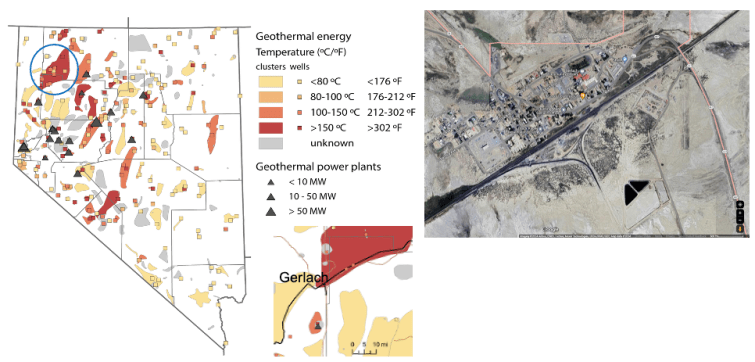
A parallel thread of this work took place in Gerlach, Nevada, where the community was actively engaged in a lawsuit against a geothermal company. The residents expressed frustration with past developers, citing land subsidence concerns, loss of local benefits, and a lack of transparency in planning. Entering into this context required care and trust-building. By emphasizing that I was a researcher rather than a developer, I was able to de-escalate tensions, listen closely to their priorities, and respond by re-framing my research. I presented the concept of pairing direct air capture (DAC) with geothermal energy — a proposal that initially drew skepticism but gradually opened into curiosity. After hearing their perspectives, I remodeled scenarios to incorporate their priorities, explored ways DAC could align with community benefit agreements, and shared information to help residents better understand and negotiate for local advantages. This collaborative, adaptive process shifted the conversation from opposition to one of cautious engagement.
Across both the Gerlach and tribal engagement experiences, the central lesson was clear: opposition to climate projects is rarely rooted in an aversion to innovation itself, but often in histories of exclusion, broken trust, and inequitable benefit-sharing. Communities expressed eagerness to learn about the technologies, but also demanded honesty about risks, transparency in decision-making, and recognition of their local and Indigenous knowledge — from endangered species habitats to cultural resources — as critical to responsible project design.
By integrating these insights directly into technical research, this project demonstrated how engineering can be enriched through two-way dialogue. Community perspectives reshaped how I modeled scenarios, framed benefits, and evaluated tradeoffs. More broadly, the work underscored that climate solutions cannot be considered equitable if they bypass or burden the very communities expected to host them. Embedding engagement into engineering practice has the potential to reduce opposition, foster trust, and design projects that serve both global climate goals and local community needs.
 Max Pisciotta